For more than five decades, one television broadcast has held the rare power to turn an ordinary weekday evening into a nationwide sporting event. While Sunday afternoons belong to a sprawling slate of simultaneous kickoffs and multi-screen viewing, Monday Night Football stands entirely alone on the weekly calendar. With every camera lens, stadium floodlight, and analyst microphone focused on a single matchup, the Monday night showcase elevates regular-season gridiron action into prime-time cultural theater.
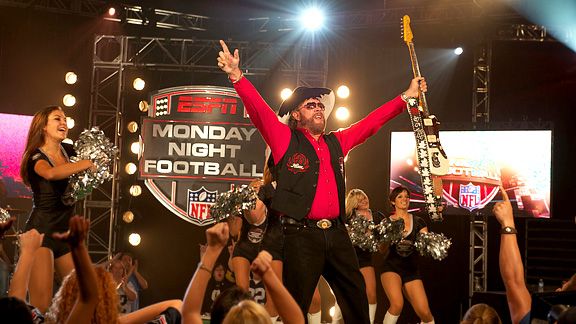
When the franchise debuted in September 1970, network executives were taking an enormous gamble. Conventional wisdom at the time insisted that prime-time weekday television belonged exclusively to sitcoms, dramas, and variety shows, and that audiences would never tune in to watch a three-hour football game on a Monday evening. Instead, the broadcast shattered ratings expectations, rewired how live sports were filmed and narrated, and cemented a weekly ritual that remains one of the crown jewels of modern television.
The Birth of a Prime-Time Broadcast Revolution
Before Monday Night Football arrived on the airwaves, televised sports were treated largely as straightforward journalistic documentation. Broadcasts used a handful of stationary cameras, relied on restrained play-by-play commentary, and rarely ventured into personality-driven storytelling.
That changed permanently under visionary television producer Roone Arledge. Recognizing that a prime-time Monday audience included casual viewers alongside die-hard football fans, Arledge reimagined the broadcast as an entertainment spectacle. He doubled the number of cameras inside the stadium, introduced dramatic low-angle field shots that captured the visceral speed of collisions, pioneered early instant-replay sequences, and placed microphones along the sidelines so living rooms could hear the crunch of pads and the bark of quarterback cadences.
Equally revolutionary was the three-person commentary booth. By pairing seasoned play-by-play announcer Keith Jackson—and later Frank Gifford—with former quarterback Don Meredith and outspoken, theatrical journalist Howard Cosell, the broadcast created a dynamic blend of technical insight, dry humor, and sharp debate. For the first time, the conversation inside the booth became just as captivating as the competition unfolding on the turf.
Why Playing Under the Monday Night Lights Feels Different
Ask any veteran player or head coach, and they will tell you that stepping onto the field on a Monday evening carries a distinct psychological charge compared to a standard Sunday afternoon kickoff.
- The Solo Spotlight: Because no other games are being played simultaneously, every player, coach, and referee across the league is watching. Career-defining performances under the Monday night lights instantly reshape narrative momentum, while costly fourth-quarter turnovers become the centerpiece of Tuesday morning sports debates nationwide.
- Altered Weekly Recovery Rhythms: Professional football teams operate on deeply ingrained weekly preparation schedules. Playing on Monday night compresses the recovery window ahead of the following Sunday’s game, forcing athletic trainers, nutritionists, and coaching staffs to carefully manage practice workloads and travel itineraries during the subsequent short week.
- Electric Stadium Atmospheres: Fans spend the entire workday building anticipation before converging on the stadium after sunset. Combined with cooler evening temperatures, dramatic pregame introductions, and prime-time pageantry, Monday night crowds routinely generate some of the loudest, most hostile environments of the entire regular season.
Iconic Moments That Built the Monday Night Legacy
Over half a century of broadcasts, Monday Night Football has served as the backdrop for unforgettable athletic feats and cultural milestones. From Bo Jackson’s legendary ninety-one-yard touchdown sprint straight into the Seattle stadium tunnel in 1987 to Brett Favre’s emotional four-touchdown masterpiece in Oakland just one day after the passing of his father in 2003, the stage has consistently brought out extraordinary human drama.
The broadcast has also produced legendary offensive shootouts, such as the 2018 clash between the Los Angeles Rams and Kansas City Chiefs that ended in a breathtaking 54-to-51 thriller, proving that even in an era of twenty-four-hour sports coverage and streaming fragmentation, a single Monday night matchup can still command universal attention.
Adapting to the Modern Streaming and Multi-Cast Era
As television habits evolved from traditional network antennas to cable packages and digital streaming platforms, Monday Night Football adapted without losing its core identity. Modern viewers can choose between the classic main broadcast—anchored by premier announcing teams—and innovative alternative presentations like the ManningCast, where brothers Peyton and Eli Manning break down live Xs and Os from their living rooms alongside celebrity and athlete guests.
Additionally, expanded flex-scheduling rules now allow league programmers to swap high-stakes late-season matchups into the Monday night slot, ensuring that December broadcasts feature genuine playoff intensity rather than lopsided contests between eliminated teams.
Conclusion
Monday Night Football endures because it successfully bridges the gap between high-level athletic competition and shared cultural storytelling. What began in 1970 as a bold television experiment fundamentally changed how every live sport is produced, filmed, and experienced around the world. Whether you are watching for meticulous tactical breakdowns, dramatic fourth-quarter comebacks, or simply the camaraderie of capping off a Monday evening with world-class football, the prime-time spotlight remains one of the most compelling traditions in modern sports.